🇯🇵 Hiroshima & Nagasaki
Japan · Western Honshū & Kyūshū
The two cities that ended WWII — today centres of peace and remembrance, set in a region full of food, islands and history.

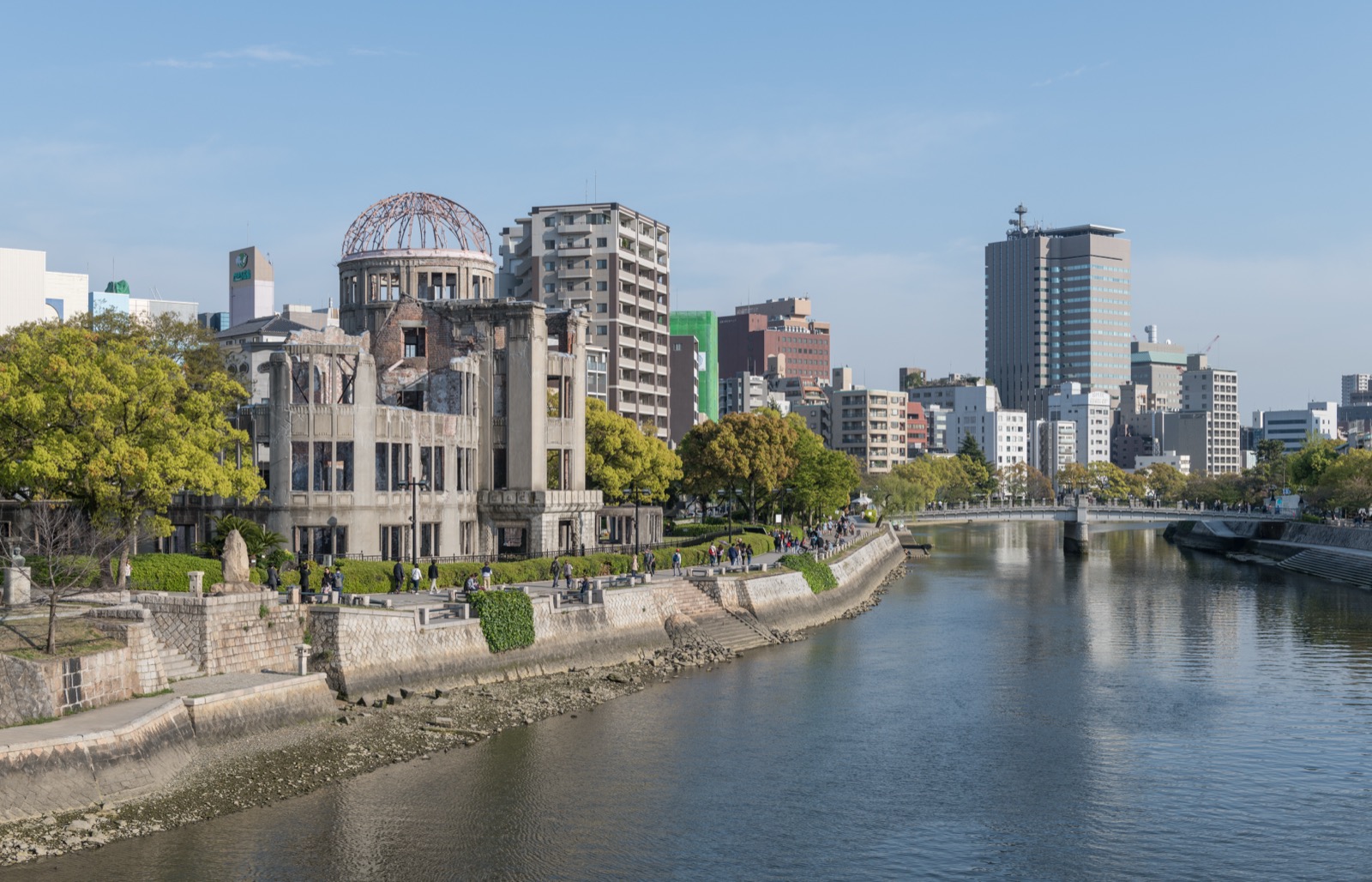
Hiroshima — DXR · CC BY-SA 4.0 · via Wikimedia Commons
🗓️ Best time to go
Spring (late March–May) for cherry blossoms, or autumn (October–November) for cool weather and colour. Avoid the humid June–August rainy/typhoon season; 6 August is the Hiroshima Peace Memorial Ceremony.
🚆 Getting around
Fly into Osaka (KIX) or Fukuoka. The Shinkansen connects Hiroshima in ~1.5h from Osaka; Nagasaki is reached via Hakata/Fukuoka. A Japan Rail Pass pays off if you're hopping between cities. Local trams cover both cities cheaply.
About
Hiroshima and Nagasaki are inseparable from the events of August 1945, and visiting them is meant to be one of the most moving experiences in Japan. But they're also living, modern cities — Hiroshima is lively and green, Nagasaki is a hilly, harbour town with a uniquely international past. I'd pair them with the nearby island of **Miyajima** and the wider Kansai/Kyūshū regions.
Interesting places to visit
Hiroshima Peace Memorial Park & Genbaku Dome
The UNESCO-listed A-Bomb Dome, the Peace Memorial Museum and the Children's Peace Monument — the emotional core of any visit.
Miyajima (Itsukushima Shrine)
The famous 'floating' torii gate, a short ferry from Hiroshima; wild deer and Mount Misen hikes.
Nagasaki Peace Park & Atomic Bomb Museum
Marks the hypocentre, with the Peace Statue and a sober, excellent museum.
Glover Garden & Dejima, Nagasaki
Nagasaki's centuries as Japan's one window to the West — hillside European villas and the reconstructed Dutch trading post.
Hiroshima Castle & Shukkeien Garden
A rebuilt feudal castle and a classic strolling garden, both within the city.
What to eat
Hiroshima-style okonomiyaki
Layered (not mixed) savoury pancake with noodles, cabbage and egg — cooked on a teppan in front of you at Okonomi-mura.
Oysters (kaki)
Hiroshima Bay is famous for them — grilled, fried (kaki furai) or in hotpot, best in winter.
Nagasaki champon & sara udon
A hearty Chinese-influenced noodle dish born in Nagasaki's Chinatown.
Castella (kasutera)
A honey sponge cake brought by Portuguese traders 400+ years ago — Nagasaki's signature sweet.
Practical tips
Allow time to sit
The memorial sites reward slowing down — don't rush them on a half-day.
Carry cash
Smaller restaurants and trams still favour yen cash; convenience-store ATMs accept foreign cards.
✨ What sparked this trip