The Nation's "What If": How April 21st Stole the Future of an Entire Generation
There are certain dates in history that function like forks in the road of destiny. For Greece, that date was 21 April 1967 — the morning the treads of tanks flattened the constitutional order and "froze" time for seven dark years.
But what if, in the early hours of that Friday, Georgios Papadopoulos's plan had leaked and been stopped in time? What if Greece had made it to the ballot box on 28 May 1967?
Diving into the historical record, the secret reports of foreign diplomats, and the balance of power of the era reveals a parallel reality — a Greece that would have avoided the greatest national tragedy since the Asia Minor Catastrophe of 1922.
1. The Triumph of May: The "Old Man's" Electoral Sweep
Had the elections of 28 May 1967 gone ahead, there was no doubt about the outcome. Every secret poll run by the American embassy and by the Greek intelligence service (KYP) showed the same thing: Georgios Papandreou's Centre Union would sweep the vote with over 50%.
The people, enraged by two years of the Apostasia and the Palace's backroom games, were ready to cash in their vote as a resounding act of revenge on behalf of democracy.
Georgios Papandreou, then 79 years old, would have been sworn in again as Prime Minister with an overwhelming popular mandate. But the real change wouldn't have come from him — it would have come from his succession. Given the "Old Man's" advanced age, leadership of the country would very quickly have passed to his son, Andreas Papandreou.
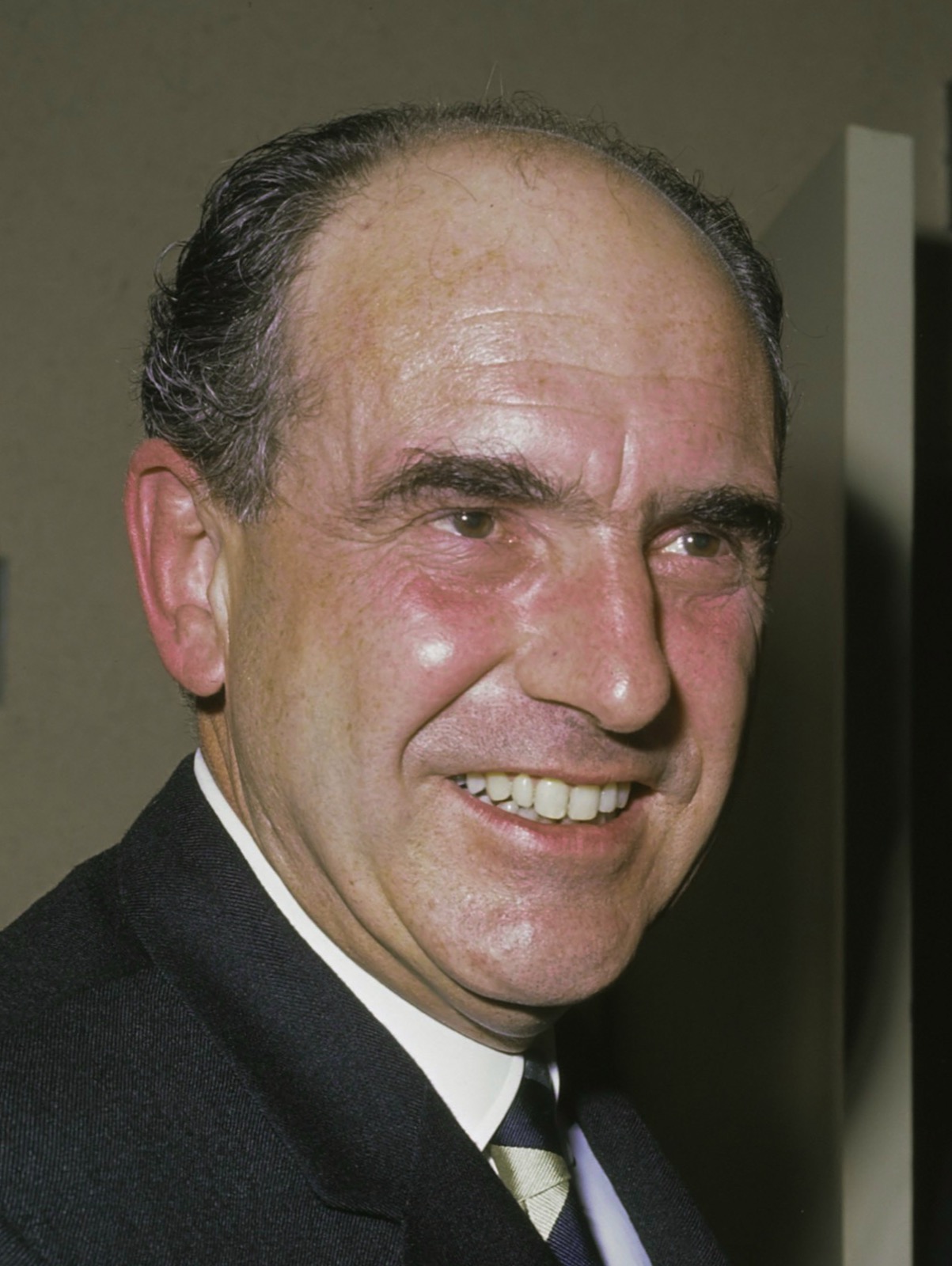

Andreas Papandreou at a press conference, Amsterdam, 1968.
Greece would have met the wave of socialist modernization and "Allagi" (Change) already by the late 1960s — instead of waiting until 1981.
2. The Crown Sidelined, and an Early Path into Europe
An electoral victory for the Centre would have disarmed the Palace. Faced with the popular verdict, the young King Constantine would have been forced to retreat into a purely symbolic role — much like the monarchs of Northern Europe.
At the same time:
- The despised certificates of social beliefs, the surveillance files, and the exiles would have been abolished much sooner.
- The Army would have gradually come under the control of the civilian political leadership, purging its paramilitary elements.
- Greece would have entered the then-EEC (European Economic Community) far earlier than 1981. The Junta froze the country's European relations for seven years; without it, economic and institutional integration with Europe would have happened on golden-opportunity terms, right at the heart of European growth.
3. The Big Win: A United, Unscathed Cyprus
This is the most tragic parameter of the "What If." The greatest wound in modern Greek history — the partition of Cyprus in 1974 — would never have happened.
For Turkey to invade Cyprus (the 1974 "Attila" operation), it needed the fatal, treacherous coup staged by the Athens Junta (under the ruthless "invisible dictator" Dimitrios Ioannidis) that overthrew Archbishop Makarios.
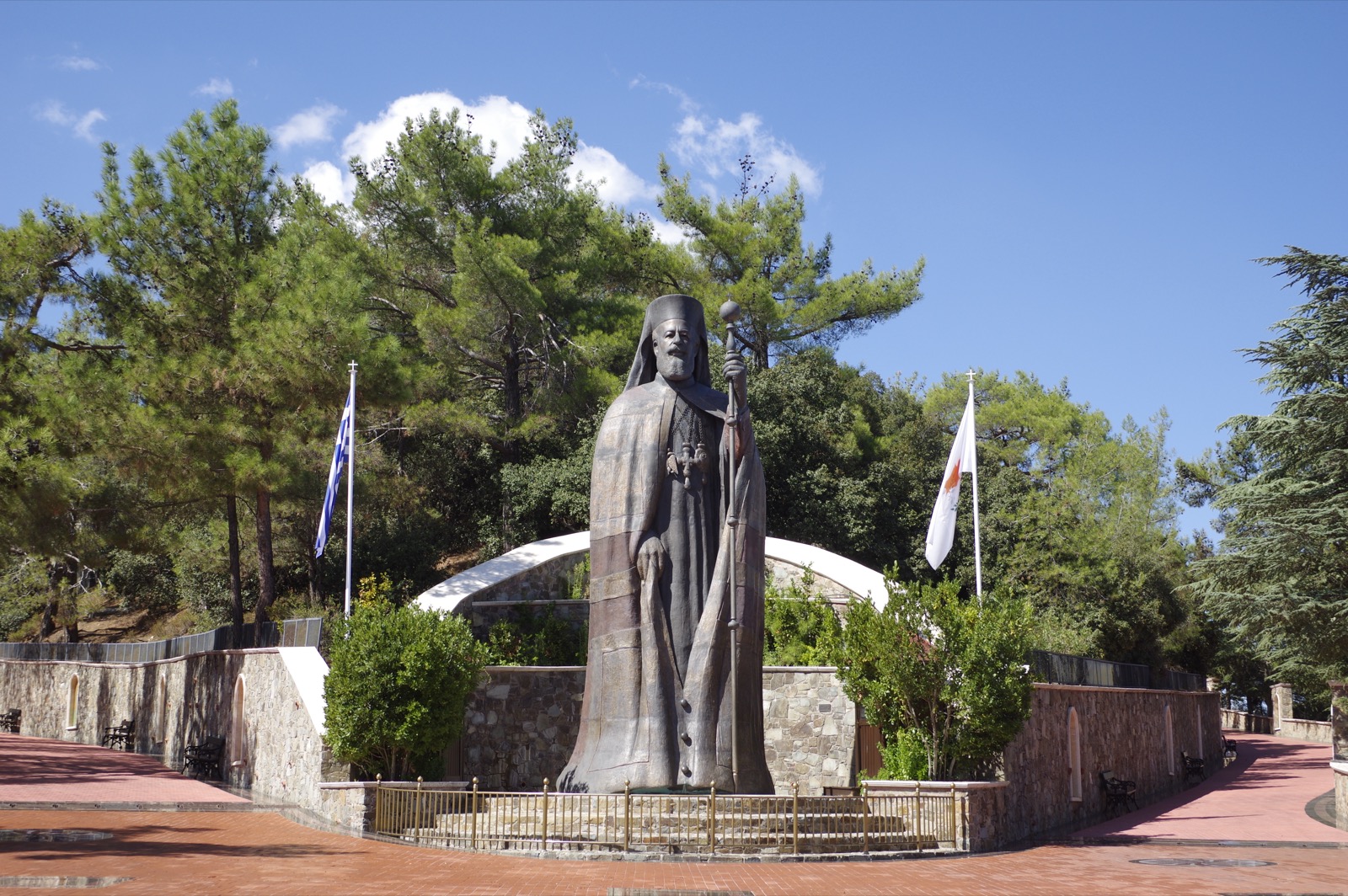

A memorial to Archbishop Makarios III, who would have remained President of Cyprus.
Without a Junta in Athens:
- There would have been no Ioannidis, and no EOKA-B to sow internal division on the island.
- Makarios would have remained President of the Republic of Cyprus.
- Ankara would have had absolutely no legal or political pretext to launch a military invasion under the guise of the Treaty of Guarantee.
Cyprus today would be a single, thriving state — no Attila, no missing persons, no barbed wire in Nicosia, no occupying army over 37% of its territory.
The Dark Scenario: Was It All Rosy?
To stay objective as historical analysts, avoiding 21 April doesn't automatically mean Greece would have turned into paradise. The country was a powder keg.
There was one major danger: the "Generals' Junta."
The King and the top military leadership were preparing their own "official" coup, in case Papandreou won the election. The colonels (Papadopoulos, Pattakos) simply beat them to it!
So even if Greece had dodged 21 April, it would still have had to fight hard, in the streets and in Parliament, to prevent a different military intervention backed by the Palace. Political turbulence in the late '60s would have been enormous.
The Verdict of History
Whatever tensions a democratically elected government would have faced in 1967, none of it compares to the heavy price the Greek nation paid because of the Seven-Year dictatorship.
Without the Junta, Greece would have gained an entire decade of democratic maturity, economic progress, and institutional modernization. And most importantly: Cyprus would have remained whole. 21 April wasn't just a political aberration — it was the moment Greece lost its future, only to find it again, wounded, amid the wreckage of 1974.
Photo credits: Andreas Papandreou, Eric Koch for Anefo, CC BY-SA 3.0 nl; Makarios III memorial, Berthold Werner, CC BY-SA 4.0 — both via Wikimedia Commons